They found her body drowned in the bathtub. Ice-cold water was still coming out of the faucet, spilling on the bathroom floor and through the hallway.
The morning it happened, I was lying on the living room couch holding my iPad, headphones on, listening to Frank Sinatra’s song “New York, New York”. We lived in a colonial style house in the neighborhood of Fieldston, Riverdale, which was considered one of the fanciest parts of the Bronx, despite this one being the borough everyone could agree had nothing to do with the romanticized version of New York City portrayed in Sinatra’s song.
A few beats before the song came to an end, I heard a distant scream cutting through the slow rhythm of the trumpet and the clarinet. It took a moment for me to recognize it as my mom’s. She was somewhere on the upper floor.
Turning the music down, I took my headphones off and directed my gaze to the stairs. Nothing. But the sound of that scream left a small uncomfortable feeling in my chest, the intuition that something was not right, because that had not been the kind of scream of disgust or unpleasant surprise one does when a cockroach or a rat suddenly appears in the middle of the kitchen. It sounded deep and heartrending. Almost desperate. The sound ended with a choke, like she had run out of air.
“Mom,” I tried. “Is everything okay?”
The feeling of worry inside my chest grew when silent seconds passed and I didn’t get an answer. I heard footsteps rushing to the bathroom, splashes of water. Then a moment of silence. Until my mom started to murmur every time louder, the words unintelligible from where I was.
“No, no, no,” I heard her broken voice. “You are okay, you will be okay, darling.” She was trying to convince herself about something she already knew wasn’t true. “My girl, my daughter… stay with me!”
I put my iPad aside and got up from the couch.
“Mom!” There was an urgency in my voice as I reached the stairs.
My dad then appeared, suffocated, on top of them, both of the long sleeves of his pajamas wet from the wrists past the elbows, his blue slippers completely soaked. Eyes wide open on his red face, looking around with urgency.
That was the moment when reality hit, and I knew with certainty that something was wrong.
“Dad what…?” I hesitated on how to continue, but he saved me the effort and cut me off, not letting me finish the question.
“The phone,” his breath felt heavy. “Liz, call an ambulance!”
He looked desperate. His movements were anxious, his muscles rigid, like he was expecting a physical attack from any direction. I then noticed the tears running down his cheeks. My father, who wasn’t the type of person that made a big deal about anything, who preferred to ignore problems and wait for them to go away instead of directly facing them, who refused to see any doctor unless he found himself in severe pain.
In the background I could still hear my mom sobbing over broken words.
“Do it,” he urged. “Now!”
I tensed to his screams but automatically reached for my iPhone in the pocket of my sweatpants and called 911, my fingers shaking as I passed the numbers on the flat screen. Before I could even say a word to the operator at the other end of the line, my dad took it from my hand and asked for the ambulance himself, demanding it like his bad manners could somehow make a difference on the outcome.
But who cares about manners when your daughter just took her life?
By the time the ambulance got to the house, it was too late. It was, even before my parents found her body drowned in the bathtub. Olivia, my older sister, had already been dead for half an hour, they told us. Her lungs were completely filled with water. Her skin partially burned from the heat.
I never understood her choice.
My parents, though, did. Olivia couldn’t push them away like she always did with me. We were five years apart from each other, so I wasn’t old enough to be told. To realize myself. She never let me in. I couldn’t have imagined the reason behind her behavior, only seeing the parts which she couldn’t hide from me. We weren’t close but, after all, we both lived in the same house.
“You have already eaten too much for dinner,” she told me once in her usual provocative and arrogant tone, taking away the Doritos bag from my hands and the guacamole from the countertop in front of me. “If you are going to have dessert, let it at least be an apple.”
“Give me that back,” I protested, too distracted to have reacted some seconds before, my mouth still full of chips. “I’m not done yet with that.” Crossing my arms, I waited for her to put the food back on the cupboards and the fridge, already planning to take them back once she went away from the kitchen, but to my surprise she just reached for the trash and threw both things in there like they had expired.
“Yes.” She threw me a defiant look. “Like hell you are”.
My face twisted; my cheeks turned red. I wasn’t sure how to react to her war statement. She caught me off guard. But anyways, who did she think she was to give me orders on what I can and can’t eat? Why did she even care? It wasn’t like she had been worried before about my overall health.
“Why did you do that?” I asked instead, not brave enough to confront her directly. I wasn’t good at reading people, but only by looking at her I could tell she was in a bad mood, and the reason was something else. But to my misfortune, I was the person at her reach to take it with. “I wasn’t bothering you with anything today.”
She crossed her arms, her expression severe, judging me like I had personally offended her, which was improbable, given the few interactions we had with one another.
“Don’t you realize you’re not in good shape?” Until she said that, I wasn’t expecting the conversation to go that way. “That’s not healthy. You don’t even exercise. If you keep eating trash like that you will become trash yourself.”
“What makes you say that?” I asked.
I looked down at my body as if to corroborate whether what she was saying was true, like I didn’t already know how I looked. Her words were merciless, but they weren’t far from reality. When sitting down my belly curved into rolls of pink flesh under my sweatshirt while Olivia’s remained in the shape of a slender hourglass. While Olivia’s runway-like legs had a harmonious separation between them, mine were like two fluffy concrete blocks that brushed against each other when I walked.
“You’re fat,” she snapped, to clarify any doubt. “Plump. Overweight.”
She often made me cry, although I never did in front of her. I never appeared vulnerable when she, nor my parents, were around.
To me those comments seemed a mere expression of cruelty, at the time not realizing they were motivated by something deeper, something rotten in her. Prior to Olivia’s death I thought of her as the cool, popular, thin teenage girl who was being nasty to her little, less cool and less popular, chubby sister. But she wasn’t as cool, and I wasn’t as chubby as she wanted to make me think.
After her death, I found out the problem was completely of her own and had nothing to do with me. It was true that I didn’t weigh what I was supposed to, but on the opposite end, neither did she.
Olivia was extremely organized, totally obsessed with control. She wrote down every single thing going on in her life. I found the notebooks. I read every single page. I looked for the pictures on her phone, and the files she hid on her computer.
And then I realized, I had never known who my sister was, not even a glimpse of her. She became a stranger to me after. But it was then when I understood.
In the beginning my parents didn’t want to talk about her, at all, when I asked. But I kept trying, I kept insisting until they acceded to give me an explanation. I wanted to understand, I needed to hear it from someone.
“She was in treatment,” my mother began, her voice fragile. “I ignored her for months when she complained about her stomach hurting. Then, too late, I started noticing,” she went on. “I took her to the doctor a few times and later they sent her to the hospital, to a specialist. So we went.”
“You went for her stomach problems?” I asked.
“She thought so,” her voice shook. “The morning we got there and she realized we weren’t in the hospital unit she expected, she flew into a rage. With me, with the doctor who first visited her, the psychologist and psychiatrist, who attended us, with herself. It broke my heart.” Her voice choked and her eyes slowly filled with tears.
My mother had never been the emotional type. Until my sister’s death, I never saw her cry, flatter, doubt, or break. She used to have the kind of strong presence that filled the entire room when she walked in. Now, that’s just a memory.
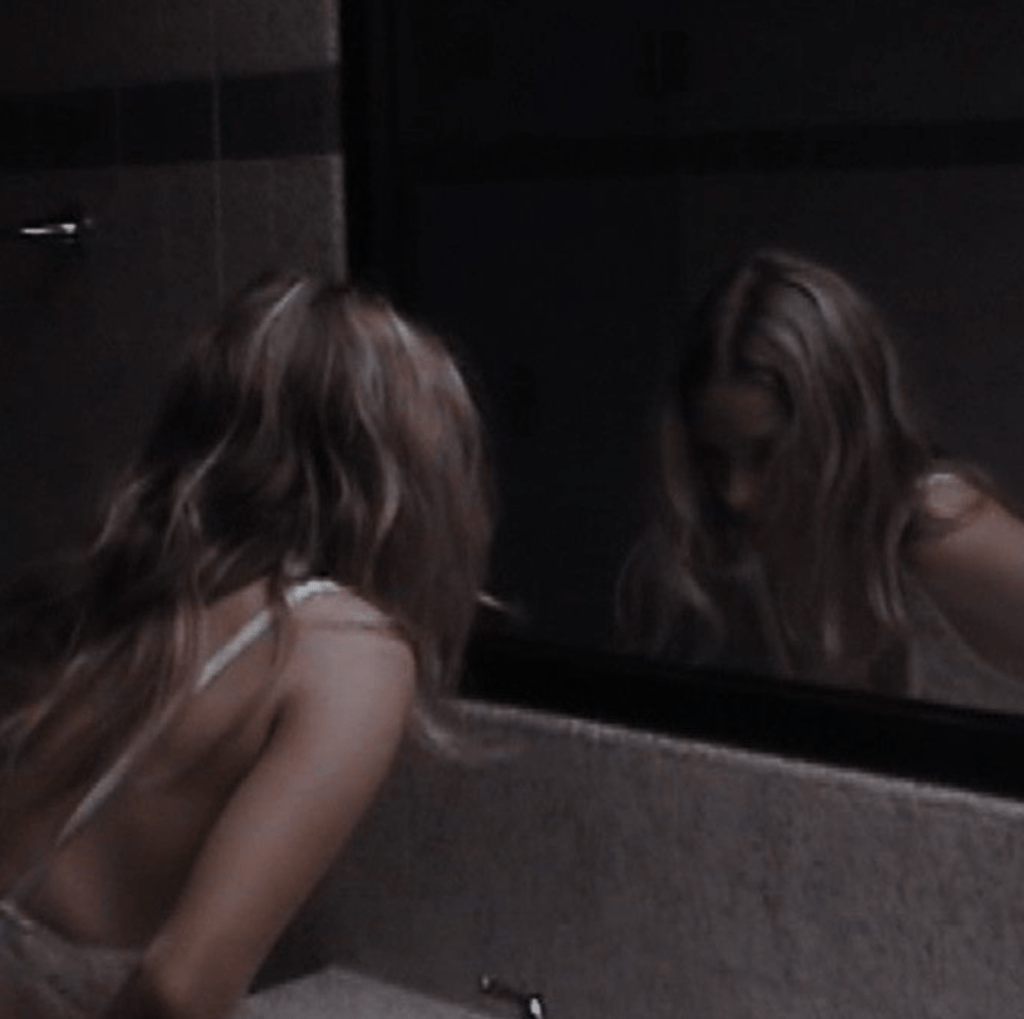
All the medical reports I found on Olivia’s computer, the treatment guidelines that she did not follow, the antidepressant prescriptions. All the pictures I had found in her phone of all the food she ate, of herself in the mirror with her belly swollen after a meal. All the pages in her notebooks, filled with black ink, where she wrote her thoughts, her experiences, illustrating the pressure she felt during the year prior to her death, to which I only saw all the anger directed through my parents, all the helpless crying. Those notebooks where she kept track of the food, the calories, her decreasing weight and her inconsistent period, the latter ultimately not having shown up a single time during her last months of life.
There I found, the last single thing she ate, a day before drowning herself in burning water, was an apple.
“Then they weighed her,” my mother continued speaking after the long pause, not being able to hold the tears any more and letting them run through her wizened cheeks. “Despite being angry, Olivia did all the tests they gave her, responded to all the questions. She was brutally honest with them. At the end of the visit the doctor of the Eating Disorder Unit diagnosed her with anorexia.”
Tears escaped my eyes before I could notice them. There was nothing I could tell my mother, nothing that would convince her she couldn’t have prevented her daughter’s suicide, that she was not to blame for someone else’s choices.
So I said nothing.
Everytime I entered the unused bathroom, upstairs, the memories of the morning Olivia’s body was found in the bathtub, drowned in burning water, flooded my mind.
After calling the ambulance, I left my hysteric father yelling on the phone and went upstairs to find out for myself. I slowly walked through the hallway not capable of assimilating what was happening, my thick socks stepping on the wet wooden floor. I never dared enter the bathroom to see her body.
All I saw, while standing in front of the door, before whoever came in dressed in white and bright orange who pushed me aside to enter the bathroom, was the mirror. Or what was left of it. All the broken pieces which were still hanging on the wall, cracked due to the impact in the middle, the tiny ones shining on the floor.
After her death, I didn’t know what to think of her. Of her, who tormented her vulnerable little sister for years the same way she internally did to herself. Of her, who decided to starve to serve higher purposes. Of her, who felt contempt for what she had left, including me. Of her, who thought she wasn’t enough and selfishly decided her life was not one worth living.
Of my big sister who punished herself with a slow, painful death.
Which wasn’t planned, although the thought had crossed her mind a few times before, as her writings suggested. Through her written words, I too late got to know Olivia’s darker faces. The demons she’d faced.
And because of her words written on the notebooks I treasured ever since she left. I allowed myself to realize no one of those were a valid excuse for her to treat me like she did. I allowed myself to see her as the selfish girl she was, who chose to leave her family to take the easy path and gave up on her life.
So I took all her notebooks, one last time. I headed to the bathroom upstairs. It was empty and dismal, so quiet it almost felt like a sacred temple. No one in the house used it. Never. A silent rule we had all agreed to. A rule I pretended to break.
Steam filled the bathroom, fogged up the window. The smell of humidity filled my senses. I knelt in front of the bathtub.
One by one, I threw Olivia’s notebooks in. I threw them all in.
Patiently, I watched them slowly sink to the bottom.
Black ink spread through the water as the thin pages began to dissolve. And I let my sister’s words drown five years after her death, in the same way, in the same place, where she herself had left to drown the ruins of her body.
Marina More, April 2022

 Marina More
Deja un comentario